Des projets durables dans les communautés en Ethiopie... Une action chrétienne pour les plus démunis.
mercredi 5 décembre 2018
vendredi 12 octobre 2018
Evaluation du projet SHG

Bonjour les amis ,
VOILA BIENTÔT DIX ANS QUE NOUS TRAVAILLONS A GONDAR en
partenariat avec l'ONG TESFA LE WOGEN ,
et TILAHUN AMANU comme RESPONSABLE DU PROJET.
FORMATION DE GROUPES DE FEMMES pour le MICRO CRÉDIT (
groupes SHG / Self Help Groups)
UNE ACTION TECHNIQUE POUR LES FORMER ET ORGANISER LES
GROUPES et
UNE ACTION COMMUNAUTAIRE POUR DONNER UNE ÂME , UN
SUIVI ET L'ACCUEIL.
Nous avons un agrément de 5 ans avec les autorités locales
de la région de GONDAR
PLUS DE 400 familles bénéficient de cette structure :
GROUPES SHG de 10/15 femmes , REGROUPES en GROUPES "
CLUSTERS " 2 DÉLÉGUÉS par groupe "d'une dizaine de groupes
OUI
après toute ces années UNE ÉVALUATION IMPORTANTE DU PROJET
Va avoir lieu cette semaine.
( Enquête , questions et traitement informatisé ,
analyse et suggestion pour la prochaine étape par des spécialistes du micro
crédit )
Nous préparions cette évaluation depuis un an avec
tous les problèmes que vous ne pouvez imaginer !!
Buts essentiels :
AIDER A LA STRUCTURATION DU
PROJET , en particulier DES "CLUSTER "
( DÉLÉGUÉS DE CHAQUE GROUPE POUR ÊTRE PARTIE
PRENANTE ET CO -RESPONSABLES DU PROJET)
PRÉPARER A L'AUTONOMIE DU
PROJET ( TESFA -FRANCE EST UN TUTEUR QUI VA SE RETIRER
PROGRESSIVEMENT )
PROJET QUI DOIT DEVENIR AUTONOME ET S'AUTO FINANCER
PROGRESSIVEMENT (but du développement durable).
PRÉPARER UNE EXTENSION DU
PROJET A LARGE ÉCHELLE ,
Devant son succès, DE NOMBREUX GROUPES SONT EN ATTENTE ,
Mais il faut garderLA
QUALITÉ, QUI PRIME SUR QUANTITÉ !
(EN DIX ANS NOUS N'AVONS REÇU AUCUNE SUBVENTION.
D.. MERCI !!, mais des dons et vente d'artisanat ,
( UN BUDGET ENCADRE ,VÉRIFIÉ ET TOTALEMENT REVERSE )
UN GRAND MERCI A TOUS , POUR VOTRE AMICAL SOUTIEN ET LES
PRIÈRES
Au nom de l'équipe de TESFA
-France
André
lundi 1 octobre 2018
The history of the Axum Empire and Ethiopian Orthodox Tewahedo Church.
State Church
The history of the Axum Empire and Ethiopian Orthodox Tewahedo Church.SEMERE T. HABTEMARIAM
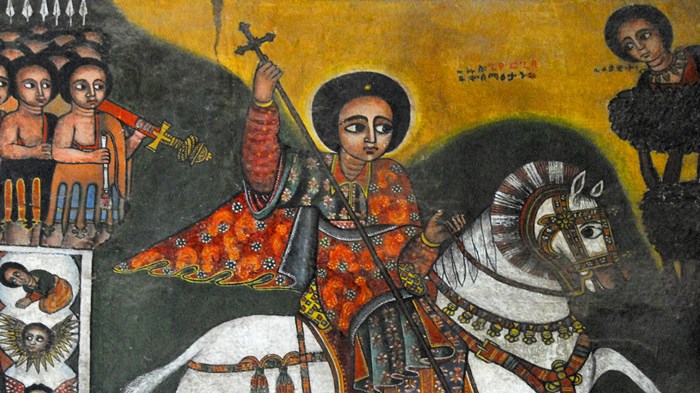
Image: Mtcurado / Getty ImagesThe two Christian missionaries that showed up in the ancient northeastern African empire of Axum in the fourth century could not have been more unlikely. Kidnapped while traveling with a relative, the two young brothers were brought as slaves to the royal family’s household. But within a few years, an unexpected chain of events cast religious and political power into their hands. While the region had been familiar with Christianity for decades, the religion was soon to spread across Axum. Indeed, the brothers’ relationship with the kingdom’s future kings and their passion for spreading the gospel would alter the history and religious composition of what is now modern-day Eritrea and Ethiopia.Today, the Ethiopian Orthodox Tewahedo Church these young men founded more than 15 centuries ago has survived estrangement from Rome, the spread of Islam, and repeated colonialization attempts. In a continent where Western Protestant theology and Catholicism looms large, the history of this institution offers a look at African Christianity that has existed for nearly as long as the church has itself.A Great Power of the Ancient World
At its height, the Axumite Empire (A.D. 100–940) was one of the four great world powers along with Persia, Rome, and China. Due to its proximity to the Middle East, its strategic location adjacent to the Red Sea, and its open and outward-looking civilization, it played an important role in regional affairs. Between the third and the sixth centuries, the kingdom enjoyed control over large areas encompassing modern-day northern Sudan, southern Egypt, Djibouti, Yemen, and southern Saudi Arabia.
Image: Wiki MediaAxum was a wealthy empire known for its sophisticated irrigation, masonry, and its unique currency. Indeed, archeologists have discovered Axumites coins as far away as India. But the country’s commercial interests went even further—extending as far as China. Axum also drew the respect of the Roman Empire. By the fourth century, the relations between Byzantines and Axum become so significant that Constantine proclaimed equal treatment of Axumites and Romans.Axum was also known for its writing system. Today, Eritrea and Ethiopia have the distinction of being the only two countries in Africa which use their own indigenous writing system: the Fidel (Geez). In fact, one of the earliest translations of the Bible was in Geez, a Semitic language, which is still used in Eritrean and Ethiopian liturgies. While not part of the biblical canon, the book of Enoch is only wholly extant in the Geez language. In the fourth century, Geez became the first Semitic language to be vocalized, a process where a sound/letter is turned into a vowel. (Much later, Semitic languages Hebrew and Arabic developed their own linguistic conventions to represent vowels.)Axum was also respected for its justice-oriented political system. The Abyssinians (who we know today as Ethiopians and Eritreans) were known by the Greeks and Arabs as people of justice. Herodotus called them “the most just men.” Centuries later, when the first Muslims faced persecution, the prophet Muhammad instructed his followers to, “go to Abyssinia, for the king will not tolerate injustice and it is a friendly country, until such time as Allah shall relieve you from your distress.” The third caliph, Osman, was among the refugees.
Image: Library of CongressAbyssinia was also an early home to the three Abrahamic religions: Judaism, Christianity and Islam. Judaism entered Abyssinia with the Queen of Sheba and later with Jewish exiles and merchants from Yemen and Egypt. (The Jewish community still exists today, although many emigrated to Israel in the 1980s.) One of the earliest Christian baptisms recorded in Scripture was the Ethiopian eunuch in Acts 8 who took his new faith with him to his homeland. Islam came to Axum before it went to its second holiest city, Medina. This migration is known as the First Hijra, when Muhammad’s first followers fled persecution in Mecca.Christianity Comes to Axum
In A.D. 316, two brothers, Frumentius and Aedesius, were sailing on the Red Sea with their uncle Meropius, a Christian philosopher from Tyre. Earlier that year, the Romans had infringed on a treaty that allowed them to use the port of Adulis. So, when Meropius’s ship came to port, Abyssinian locals massacred the entire crew, only sparing the brothers so they could take them as slaves. The brothers became part of the royal household where they earned King Ella-amida’s trust as gifted teachers and administrators. In time, the king named Aedesius his cupbearer and Frumentius his treasurer and secretary. Ella-amida died shortly after the birth of his sons Ezana and Se’azana, leaving much of their care in the hands of his queen and his two trusted servants, who would introduce the young royals to Christianity.
Image: Library of CongressWhile Axum’s royal family was encountering Christianity for the first time, the faith had long existed in the region. There are oral and written traditions that show that early church fathers Mark, Matthew, and Bartholomew preached the gospel in Abyssinia. As noted above, the Book of Acts recounts the story of an Ethiopian eunuch who is baptized by the apostle Philip and returns home to evangelize his countrymen.Further, the port of Adulis, located on the coast of modern-day Eritrea, was the primary transit harbor between Byzantium and India and, as such, had many interactions with Christian merchants. While the number of Christians that existed in Axum in the fourth century is unknown, one can infer that small pockets had existed, particularly in the urban areas. Before his consecration as the first bishop, as treasurer and advisor to the Queen Regent, Frumentius encouraged these urban Christians to evangelize and practice their faith openly.In A.D. 328, Frumentius was consecrated as the first bishop of Axum by Athanasius, the 20th Patriarch of the Church of Alexandria. Frumentius’s new role made Axum the second official Christian state in the world, following Armenia’s lead roughly 25 years after the Eastern European country adopted the faith. (Axum also made this decision more than 50 years before Rome.) Frumentius baptized the two brothers he had helped raise, both of whom would become kings of Axum. Under the rule of Ezana, the first brother to become king, Axum also became the first in the world to engrave the sign of the cross on its currency.Once Christianity was adopted by the royal family, it quickly spread throughout the empire. Frumentius built several churches and traveled throughout the country to evangelize, chronicled in his hagiography, Gedle Abba Selema. Like the story of the beginning of Christianity in other regions, the faith first took root in the urban, commercial, and political centers and then moved outward to the rural areas.Axumites were already familiar with the idea of monotheism. Christ’s revolutionary and yet conservative teaching in Matthew 5:17—“Do not think that I have come to abolish the Law or the Prophets; I have not come to abolish them but to fulfill them”—might have resonated with Abyssinian Jewry.American scholar W. L. Hansberry, in his book Pillars in Ethiopian History, quotes Sir Francis B. Head, a British officer, who aptly captured the spread of Christianity in Abyssinia.“Never did the seed of Christian religion find more genial soil than when it first fell among the rugged mountains of Abyssinia … no war to introduce it, no fanatic priesthood to oppose it, no bloodshed to disgrace it; its only argument was its truth; its only ornament was its simplicity; and around our religion, thus shining in its native luster, men flocked in peaceful humility, and hand in hand, joined cheerfully in doctrines which gave glory to God in the Highest, and announced on earth peace, goodwill toward men.”The absence of Christian persecution sets Axumite Christianity apart from those in the Greco-Roman world, where the faith was perceived as a threat to the existing order. But in the case of Axum, the kings themselves had been brought up in the faith and consequently did not feel as though Christianity was an outside force thrust upon them.A Maturing Church
Christianity heralded a new age in Abyssinia—the birth of advanced learning. A new class of people emerged fully devoted to learning and the cause of Christianity. As the first vocalized Semitic language, Geez simplified and improved reading and writing. The biblical translation that started in the fourth century set in motion other literary works in philosophy, history, and medicine. Instead of writing on stones and papyri, scribes turned to leather, a more portable medium that enabled more Axumites to learn to read and write.In recognition of this transformative era, Frumentius, the first metropolitan bishop of Axum, was fittingly renamed Kesate Birhan (revealer of light) and Aba Selama (father of peace). The two royal brothers, Ezana and Se’azana, became Abreha (one who lit light) and Atsebeha (one who brought the dawn) during their consecration.As the church grew, it dovetailed its Christian heritage with its unique cultural and social settings, developing an indigenous form of Christianity with strong Judaic overtones and its own cadre of saints. Some of the most prolific were the Nine Saints, a group of missionaries who hailed from such cities as Antioch, Constantinople, Asia Minor, Rome, and Caesarea and arrived in Axum and played an important role in spreading the gospel at the end of the fifth century. Widely referred to as the Second Evangelization, the arrival of these men helped to solidify an indigenous Christian and African identity. Their accomplishments included completing the biblical translation into Geez initiated by Frumentius and writing the historical and philosophical books which became the bedrock of Abyssinian cultural identity.Shortly after the arrival of the Nine Saints, Axum’s best-known king ascended to the throne. Kaleb secured a name for himself by protecting Nestorian Christians from persecution. The besieged community, which resided in Yemen and Southern Arabia, lay vulnerable after the region’s ruler Yusuf Dhu Nuwas converted to Judaism and sought to avenge Jews who had suffered under successive Christian rulers of the Roman Empire. When the Roman cities fell under his control, he gave the people the chance to convert to Judaism or face extermination. Moved by the plight of other Christians, Kaleb sent his army to rescue these Christians and his men ultimately defeated Dhu Nuwas. His victory earned Kaleb the nickname “Protector of the Faith.”Axum’s decline
The seventh century marked the beginning of the end for Axum. The disruption of the Red Sea commerce, the Beja invasion which pushed the Axumite frontier further south, and, perhaps most significantly, the rise of Islam contributed to the decline of the empire.Muhammad had singled out Axum early on as a place that might be amenable to Islam, believing that its monotheistic beliefs would make it easier for Abyssinians to embrace Islam. He sent a letter to the Abyssinian king emphasizing the prophethood of Jesus and the virginity and purity of Mary. While some Christians did convert, most did not. According to Pew Research Center, Muslims currently make up about 37 percent of Eritrea and 35 percent of Ethiopia.Today, the Tewahdo Church has the most adherents of all the Oriental Orthodox churches and is second only to the Russian Orthodox in size among all Eastern Orthodoxy. (Most of the Oriental churches were eclipsed by the Muslim Crescent and their adherents relegated into minority status.) The Tewahdo Church, however, stayed autonomous despite its centuries-long isolation from the rest of Christendom. The topography of the country, the readiness of its peoples to defend its heritage, and its relatively friendly relations with Islam enabled Abyssinia to maintain its sovereignty.This isolation may also have contributed to a theological rift between the Tewahdo Church and the rest of Christianity. The Tewahdo Church (whose name means “being made one” in Geez) follows the Coptic Orthodox belief in the complete union of divine and human natures into one perfectly unified nature in Christ. This view, deemed heretical by Western and Eastern churches at the Council of Chalcedon in 451, is maintained today by the Copts, the Tewahdo, and other Oriental Orthodox churches. While this view is condemned by Protestants, Catholics, and Eastern Orthodox Christians, it serves as a doctrinal indicator of the autonomy and independence of this venerable African church.The Tewahdo church is the oldest and most venerated institution in Eritrea and Ethiopia. Its presence hasn’t only preserved and built up Christianity—it has created a repository of art, music, culture, poetry, and literature. While Christianity is no longer the official religion of these countries, the Tewahdo church continues to guide the moral, spiritual, and intellectual lives of its more than 45 million adherents.Semere T. Habtemariam is the author of two books: Reflections on the History of the Abyssinian Orthodox Tewahdo Church and Hearts Like Birds. He was born in Eritrea and came to the US as a refugee. He lives in Carrollton, Texas.
jeudi 2 août 2018
L' Ethiopie s'invite à Lourmarin !
Si vous êtes de passage à Lourmarin dans le Lubéron cet été 2018,
visitez le Temple qui est exceptionnellement ouvert durant 2 semaines,
avec son exposition sur l'histoire des Vaudois,
ainsi qu'une vente d'artisanat Éthiopien,
au profit de projets de micro finance pour des groupes de femmes en Éthiopie.
visitez le Temple qui est exceptionnellement ouvert durant 2 semaines,
avec son exposition sur l'histoire des Vaudois,
ainsi qu'une vente d'artisanat Éthiopien,
au profit de projets de micro finance pour des groupes de femmes en Éthiopie.
mardi 24 juillet 2018
Le salon de beauté de Mahlet
"Mahlet Mekonen" est une jeune fille de 25 ans inscrite dans le projet de microfinance d'un SHG nommé "Hamus Gebeya".
Mahlet a rejoint ce groupe en Septembre 2017 et a réussi à économiser 1053 birr.
En 2012, Mahlet a abandonné ses études secondaires en 9e année et l'année suivante (en avril 2013), elle s'est rendue dans un pays arabe (Oman) pour occuper un emploi de femme de ménage.
Après deux années de travail à Oman, Mahlet a terminé son contrat et est rentrée chez elle en mars 2015. Avec l'argent économisé d'Oman, elle souhaitait démarrer une activité, mais aucun organisme ne l'a encouragé et finalement elle a perdu son temps.
Très vite, en juin 2015, Mahlet est retourné à Oman. Là, elle a souffert de la famille arabe chez laquelle elle travaillait, en particulier de la fille aînée de cette maison.
Mahlet était considérée comme une esclave et finalement elle a décidé de rentrer en Éthiopie, mais la famille a refusé de la dédommager. Elle réussit néanmoins à repartir en Éthiopie en août 2017, laissant derrière elle les huit mois de salaire qu'on lui devait et avec une grande douleur.
Quand elle est arrivée à Gondar, en regardant ses voisins se réunir, et discuter de la vie. elle a demandé s'il était possible de rejoindre le groupe. Le groupe a chaleureusement accueilli Mahlet et lui a conseillé de créer un salon de beauté.
Ensuite, Mahlet a rejoint le programme SHG et un collège de beauté à Azezo, Gondar. Après avoir suivi une formation sur la beauté de trois mois, elle est diplômée de "Ruth Beauty College".
Après l'obtention du diplôme, Mahlet a acheté des équipements de salon de beauté pour femmes et a démarré l'entreprise dans la maison de sa mère. L'entreprise se passe bien même si certains jours aucune cliente ne visite le salon. Parfois, généralement pendant les vacances, elle reçoit beaucoup de clients et l'entreprise devient plus intéressante.
La semaine dernière, Mahlet a demandé un prêt de 3000 birr pour acheter plus d'équipement pour le salon. Le groupe a discuté et a accepté le prêt.
Comme d'habitude, Tesfa Le_Wogen a donné un chèque de 3000 birr.
Mahlet Mekonen" is a 25-year-old girl enrolled in the microfinance project of a SHG named "Hamus Gebeya".
Mahlet joined this group in September 2017 and managed to save 1053 birr.
In 2012, Mahlet dropped out of high school in grade 9 and the following year (in April 2013) she went to an Arab country (Oman) to work as a cleaning lady.
After two years of work in Oman, Mahlet completed her contract and returned home in March 2015. With the money saved from Oman, she wanted to start an activity, but no organization encouraged her and eventually she lost his time.Very quickly, in June 2015, Mahlet returned to Oman. There, she suffered from the Arab family she worked for, especially the older daughter of this house.
Mahlet was considered a slave and finally decided to return to Ethiopia, but the family refused to compensate her. She nevertheless managed to return to Ethiopia in August 2017, leaving behind the eight months of salary that was owed to her and with great pain.
When she arrived in Gondar, watching her neighbors get together, and discuss life. she asked if it was possible to join the group. The group warmly welcomed Mahlet and advised her to create a beauty salon.
Then Mahlet joined the SHG program and a beauty college in Azezo, Gondar. After three months of beauty training, she graduated from Ruth Beauty College.
After graduation, Mahlet purchased women's beauty salon equipment and started the business in her mother's home. The business is going well even though some days no customer visits the show. Sometimes, usually during holidays, she gets a lot of customers and the business becomes more interesting.
Last week, Mahlet asked for a loan of 3000 birr to buy more equipment for the show. The group discussed and accepted the loan.
As usual, Tesfa Le_Wogen gave a check for 3000 birr.
Mahlet a rejoint ce groupe en Septembre 2017 et a réussi à économiser 1053 birr.
En 2012, Mahlet a abandonné ses études secondaires en 9e année et l'année suivante (en avril 2013), elle s'est rendue dans un pays arabe (Oman) pour occuper un emploi de femme de ménage.
Après deux années de travail à Oman, Mahlet a terminé son contrat et est rentrée chez elle en mars 2015. Avec l'argent économisé d'Oman, elle souhaitait démarrer une activité, mais aucun organisme ne l'a encouragé et finalement elle a perdu son temps.
Très vite, en juin 2015, Mahlet est retourné à Oman. Là, elle a souffert de la famille arabe chez laquelle elle travaillait, en particulier de la fille aînée de cette maison.
Mahlet était considérée comme une esclave et finalement elle a décidé de rentrer en Éthiopie, mais la famille a refusé de la dédommager. Elle réussit néanmoins à repartir en Éthiopie en août 2017, laissant derrière elle les huit mois de salaire qu'on lui devait et avec une grande douleur.
Quand elle est arrivée à Gondar, en regardant ses voisins se réunir, et discuter de la vie. elle a demandé s'il était possible de rejoindre le groupe. Le groupe a chaleureusement accueilli Mahlet et lui a conseillé de créer un salon de beauté.
Ensuite, Mahlet a rejoint le programme SHG et un collège de beauté à Azezo, Gondar. Après avoir suivi une formation sur la beauté de trois mois, elle est diplômée de "Ruth Beauty College".
Après l'obtention du diplôme, Mahlet a acheté des équipements de salon de beauté pour femmes et a démarré l'entreprise dans la maison de sa mère. L'entreprise se passe bien même si certains jours aucune cliente ne visite le salon. Parfois, généralement pendant les vacances, elle reçoit beaucoup de clients et l'entreprise devient plus intéressante.
La semaine dernière, Mahlet a demandé un prêt de 3000 birr pour acheter plus d'équipement pour le salon. Le groupe a discuté et a accepté le prêt.
Comme d'habitude, Tesfa Le_Wogen a donné un chèque de 3000 birr.
Mahlet Mekonen" is a 25-year-old girl enrolled in the microfinance project of a SHG named "Hamus Gebeya".
Mahlet joined this group in September 2017 and managed to save 1053 birr.
In 2012, Mahlet dropped out of high school in grade 9 and the following year (in April 2013) she went to an Arab country (Oman) to work as a cleaning lady.
After two years of work in Oman, Mahlet completed her contract and returned home in March 2015. With the money saved from Oman, she wanted to start an activity, but no organization encouraged her and eventually she lost his time.Very quickly, in June 2015, Mahlet returned to Oman. There, she suffered from the Arab family she worked for, especially the older daughter of this house.
Mahlet was considered a slave and finally decided to return to Ethiopia, but the family refused to compensate her. She nevertheless managed to return to Ethiopia in August 2017, leaving behind the eight months of salary that was owed to her and with great pain.
When she arrived in Gondar, watching her neighbors get together, and discuss life. she asked if it was possible to join the group. The group warmly welcomed Mahlet and advised her to create a beauty salon.
Then Mahlet joined the SHG program and a beauty college in Azezo, Gondar. After three months of beauty training, she graduated from Ruth Beauty College.
After graduation, Mahlet purchased women's beauty salon equipment and started the business in her mother's home. The business is going well even though some days no customer visits the show. Sometimes, usually during holidays, she gets a lot of customers and the business becomes more interesting.
Last week, Mahlet asked for a loan of 3000 birr to buy more equipment for the show. The group discussed and accepted the loan.
As usual, Tesfa Le_Wogen gave a check for 3000 birr.
mardi 12 juin 2018
Addisie Azene
"Addisie Azene", age approximately 40, is a widow and a mother of three
children, two boys and one girl. She is a member of a group named "Serto
Masaya No 1". Addisie saved 1,386 birr with in the last two years. Her
business is selling Injera and in order to expand the Injera business
she requested a loan of 3,000 birr. After the group allowed Addisie to
take the loan, we gave her a cheque of 3,000 birr.
vendredi 8 juin 2018
Histoire très touchante d' EMEBET
Emebet Asmare is a 20 year old orphaned girl who graduated from
high school three years ago.
Twelve years ago, Emebet was living with
her parents in a rural village named "Belesa". One day, the family ox
gets sick and they tried the traditional healing process but that oxen
couldn't get better.
Soon, the family decided to slaughter the oxen and
sell the meat before it dies, as this is the culture in most rural
villages. Then, the oxen was slaughtered and its meat was sold for the
entire village. The next morning, a terrible incident happened in this
particular village. No body, except this eight year old girl, was able
to wake-up. Everyone else who ate the oxen meat was dead.
Later, a
government delegation investigated and found that the oxen was sick of
Anthrax, a deadly disease of cattle. A week after that incident, the
uncle brought little Emebet to Gondar and she started school.
In 2015,
Emebet graduated from high school and the next year she graduated from a
beauty college and get hired in hair dresser saloon.
Working
in the saloon, Emebet joined an SHG group named "Lideta". Emebet has
been in the group for 16 months and managed to save 6,771 birr.
Now, she
rented a hair dressing saloon and started her own business. To expand
the business, she asked a loan of 15,000 birr. The group permitted her
to take the loan and we gave her the cheque for the loan.
Emebet Asmare est une orpheline de 20 ans qui a terminé ses études secondaires il y a trois ans.
Il y a douze ans, Emebet vivait avec ses parents dans un village rural nommé "Belesa". Un
jour, les bœufs de la famille sont tombés malades et malgré les soins apportés, les bœufs n'allaient pas mieux. Aussi
la famille a décidé d'abattre les bœufs et de vendre la viande avant
qu'ils ne meurent, car c'est la coutume dans la plupart des villages
ruraux. Ensuite, les bœufs ont été abattus et leurs viandes ont été vendus pour l'ensemble du village.
Le lendemain matin, un terrible incident s'est produit, aucun villageois n'avait survécu, à l'exception de cette jeune fille de huit ans. Tous les autres qui avaient mangés de la viande de bœuf étaient morts. Plus
tard, une délégation du gouvernement a enquêté et a constaté que les
bœufs étaient malades de l'anthrax, une maladie mortelle pour le bétail. Une semaine après cet incident, l'oncle a amené la petite Emebet à Gondar ou elle a commencé l'école.
En
2015, Emebet est diplômée de l'école secondaire et l'année suivante,
diplômée d'un collège de beauté et a pu ainsi se faire embaucher dans un
salon de coiffure.
Travaillant dans ce salon, Emebet a rejoint un groupe SHG nommé "Lideta".
Emebet fait partie du groupe depuis 16 mois et a réussi à économiser 6 771 birr. Maintenant, elle loue un salon de coiffure et a commencé sa propre entreprise.
Pour développer l'affaire, elle a demandé un prêt de 15 000 birrs. Le groupe lui a permis d'obtenir le prêt et nous lui avons donné le chèque du prêt.
Inscription à :
Articles (Atom)
Rahmet
The above old woman is named "Rahmet", age estimated to be above 70. Rahmet is a muslim widow who has four daughters and twelve ...
-
"Addisie Azene", age approximately 40, is a widow and a mother of three children, two boys and one girl. She is a membe...
-
Two Slave Brothers Birthed Africa’s Oldest State Church The history of the Axum Empire and Ethiopian Orthodox Tewahedo Church. S...
-
Visite du pasteur Californien Randy Ponder chez l'une des femmes faisant parti d'un groupe SHG.